
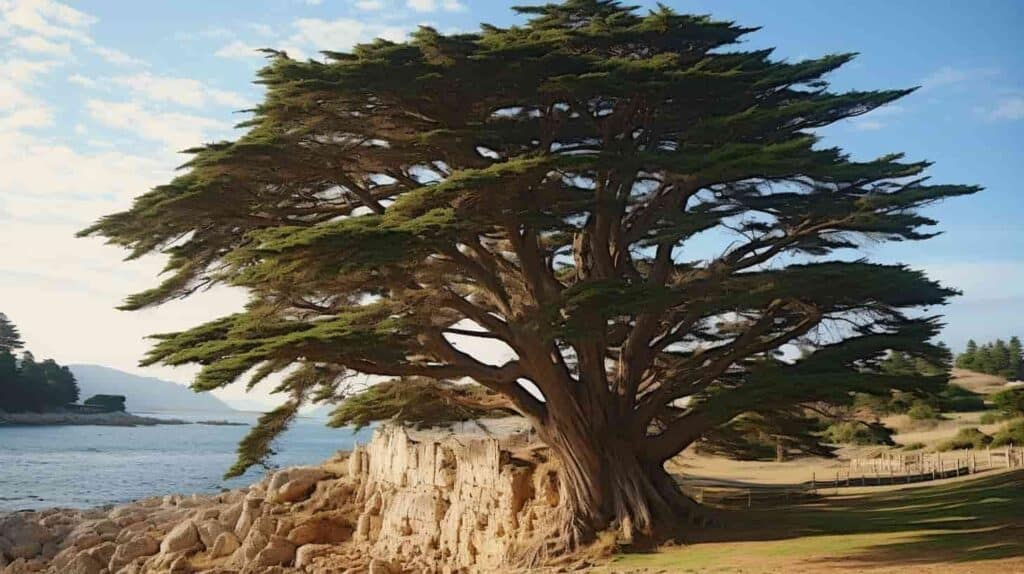
Common name Monterey Cypress
Botanical name Hesperocyparis macrocarpa
Family Cupressaceae
Natural range West Coast USA
Mature height to 30m
Form Large tree with rounded crown
Likes Drought-resistant, tolerates salt-spray and wind
Dislikes Cypress Canker
Where to plant Windbreak for your farm
Known for Large conifers that eventually fall to pieces
Meet Hesperocyparis Macrocarpa
If you’ve journeyed through rural landscapes, the imposing silhouette of the Monterey Cypress, or Hesperocyparis macrocarpa, may not be unfamiliar. Towering up to 30m, these trees indigenous to the West Coast of the United States and belonging to the Cupressaceae family, render a captivating sight.
Monterey Cypress: The Farmers’ Trusty Windbreak
Monterey Cypress, often spotted alongside farmhouses, are more than merely towering marvels of nature. They don a significant role in farming, particularly in Australia and New Zealand. Their speedy growth and dense foliage outshine most native species in offering protection against gusty winds for crops and livestock on farms.
Aging Monterey Cypress: The Bane of Deadwood
However, much like everything else, Monterey Cypress trees have a lifespan. As they age, their decline becomes evident as they shed deadwood, lose foliage, and leave fallen limbs in their wake. This can result in a considerable mess for farmers to clear or ignore, if they choose to.
Urban Landscapes and ‘Possum Hotels’: The Other Side of Monterey Cypress
While their utility as windbreaks defines their rural presence, Monterey Cypress are also popular for ornamentation. They’re often seen as garden plantings or forming hedges in city landscapes. In addition, their dense foliage endears them to possums who find safe dwellings in these urban Cypress trees, thus earning them the nickname, ‘possum hotels’.
‘Macrocarpa’: The Ubiquitous Monterey Cypress in Australia and New Zealand
In Australia and New Zealand, the adaptability and rapid growth of Monterey Cypress, fondly known as ‘Macrocarpa’ in New Zealand, have made them a common sight. However, the same conditions that foster their swift growth also encourage fungal infestations. Many Monterey Cypress, young and old, are falling victim to Cypress Canker, a resilient fungal infection.
Cypress Canker: The Dark Cloud over Monterey Cypress
Cypress Canker tends to strike during periods of stress for the trees, such as a drought followed by high rainfall. The fungal onslaught weakens the root systems, making recovery challenging. The infection could affect a whole row of trees all at once or appear to gradually advance along the line of trees – a concerning situation for these magnificent trees.
Intriguing Insights on Monterey Cypress:
- Monterey Cypress are indigenous to a small region in California, USA.
- They’re known for their rapid growth and resilience to winds.
- Their dense foliage endears them to possums, earning them the epithet ‘possum hotels’.
Further Reading on Monterey Cypress:
- The Double-Edged Sword: Monterey Cypress and Fungal Growth
- The Lifecycle and Challenges of Monterey Cypress
- Unraveling Cypress Canker: The Nemesis of Monterey Cypress
More from our Tree Spotlight collection
Liked this tree? Jump to something else. There’s not many like it.
Back to the Tree Spotlight main page
